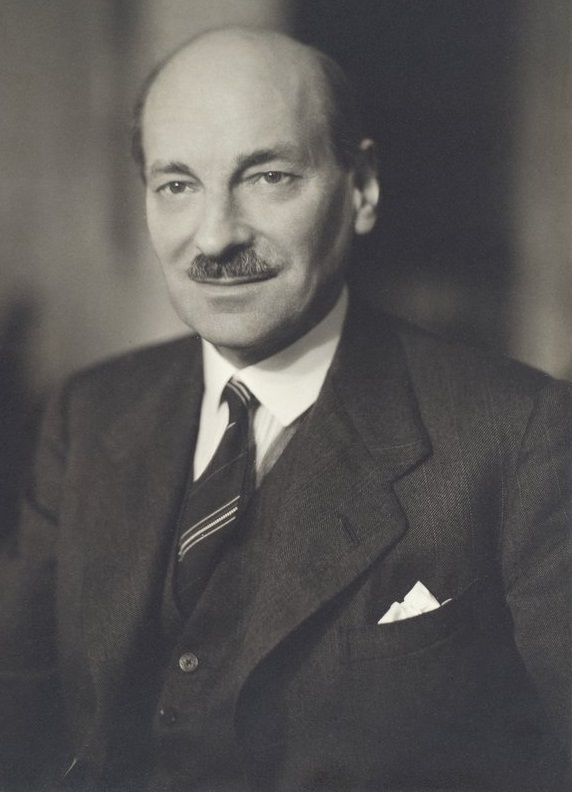
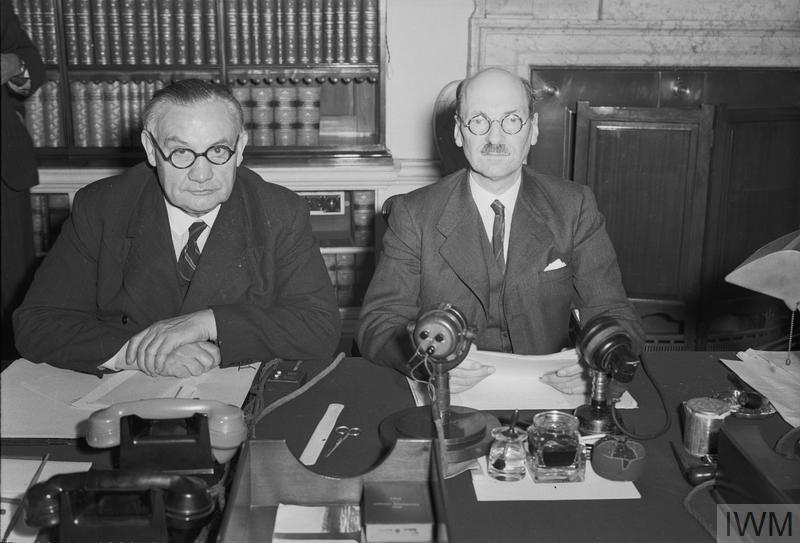
Attlee knew even less about economics, and left his three Chancellors of the Exchequer to run the Treasury largely unimpeded. His first, Hugh Dalton (1945–7), was an academic who had befriended J.M. Keynes at Cambridge, where he became a socialist. A junior minister under Ramsay MacDonald from 1929 to 1931, he was appointed by Churchill to his government in May 1940, who then promoted him to President of the Board of Trade (1942–5). At the last minute, Attlee switched him from Foreign Secretary to Chancellor. Once ensconced at the Treasury, Dalton introduced heavily progressive taxation policies and nationalised the Bank of England in February 1946, introducing a Keynesian economic policy aiming for full employment. The economy moved into trouble in 1947, with a run on the pound and a fuel crisis. Dalton’s response was an emergency Budget in November 1947, when he leaked tax details to a journalist at the Star, and was forced to resign. He returned as a minister in May 1948, but never recovered the same authority.
Attlee worked closer still with his successor, Stafford Cripps (1947–50), who he trusted completely, and who proved an abler Chancellor. The appointment showed Attlee’s pragmatism as, just months before, at the time of economic jeopardy in early 1947, Cripps had led the opposition to him, placing his leadership on the line. The intervention of Bevin was decisive in seeing off the threat.
Cripps puritanical philosophy informed his austerity policies. Needing to find substantial sums for the NHS and other social reforms, he drove growth via boosting production and exports, utilising many of the direct controls still in existence from the war. Appealing to the sense of collective good, another legacy of the war, Cripps persuaded the trade unions to accept a voluntary freeze on wage increases in early 1948, which held until 1950. Marshall Aid pumping in money from 1948 gave Cripps valuable financial leg-room, though he was still forced to devalue the pound against his will in September 1949. By the summer of 1950, Cripps had become so unwell that he had to resign, and he died that October. His greatest achievement was to steer post-war Britain to an economic recovery, harnessing the mixed economy to capitalise on the strengths of the public and private sectors.
Hugh Gaitskell was Attlee’s final Chancellor. A gifted economist, he had become an MP only in 1945, but had risen fast, and was appointed as a junior minister at the Treasury after the 1950 General Election. Attlee trusted him, but Gaitskell lacked the weight in Cabinet of a Dalton or Cripps. He soon ran headlong into problems with sterling, even before being caught up in the fierce debate on how the government could pay for Britain’s contribution to the Korean War, which started in June 1950. His Budget in April 1951 prompted the resignation of Bevan and Wilson, in protest at its health charges to pay for rearmament. Labour’s defeat in the General Election in October 1951 cut short what might have been a promising chancellorship. Gaitskell went on to succeed Attlee as Labour leader in December 1955 until his death in January 1963.
Building the Welfare State
Herbert Morrison, Lord President and Leader of the House of Commons from July 1945 until March 1951, when he became Foreign Secretary, was the last of the ‘Big Five’ (alongside Attlee, Bevin, Cripps and Dalton) to have held senior positions in Churchill’s wartime coalition. The dominant figure on the London County Council in the 1930s, Morrison had been a major figure alongside Dalton in reshaping Labour’s domestic policy. Appointed Home Secretary in October 1940, he was prominent in organising Britain’s civil defence during the war, and latterly became a key figure determining Labour’s post-war policy, which eventually bore fruit in the manifesto, Let Us Face the Future. Attlee relied heavily on Morrison’s organisational flair for managing the House of Commons, overseeing the passage of domestic policy through Parliament, and knocking disputatious Labour politicians into shape. Without such a capable organisational genius, Attlee would have struggled to oversee such an unprecedented volume of legislation through the House of Commons. He missed Morrison when years of overwork resulted in him withdrawing for several critical months in 1947, which coincided with the beginning of the loss of momentum of his entire government. When Morrison returned to the fray in 1948, he became a major exponent of consolidation rather than pursuing further nationalisations.
Aneurin Bevan was Attlee’s final star, and the only one of the Big Six not to have had ministerial experience. As Peter Hennessy points out, only one other Cabinet minister lacked ministerial experience. A Welsh MP since 1929, he made his name as a fierce critic on the left of the party, passionate about enhancing the lives of working people. As Minister of Health, he drove the legislation to create the NHS in July 1948, in the face of strong opposition from the medical profession, with free treatment for all regardless of income. The government’s greatest single achievement had deep roots in plans drawn up before 1945. Attlee worked closely alongside Bevan to secure the passage of the legislation, which saw spending on health rise from 2.1 per cent of GDP in 1945 to 3.6 per cent in 1951. Great governments introduce reforms that endure: the status of the NHS at the time of writing in 2020, during the coronavirus outbreak, is stellar. Had Attlee’s government achieved nothing else, it would still have been regarded as historic because of the NHS.
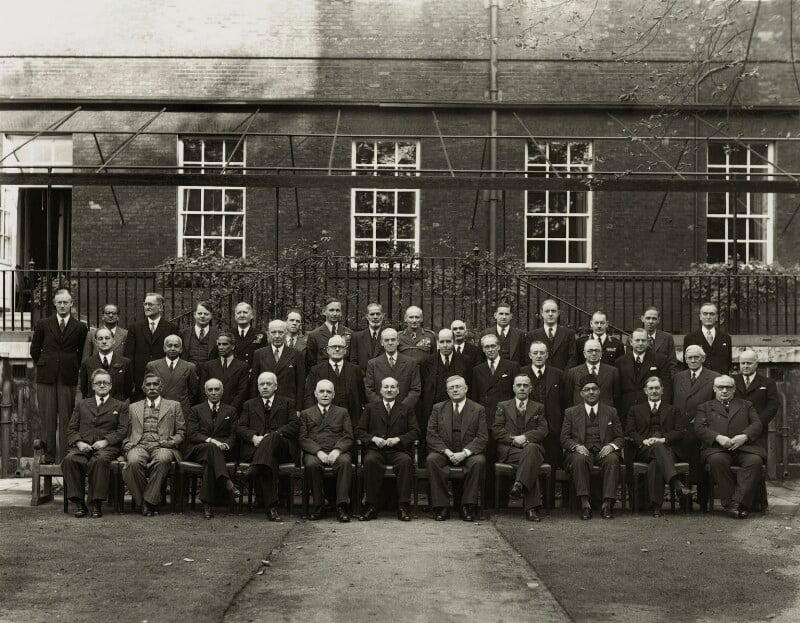
None of Labour’s other five prime ministers, MacDonald, Wilson, Callaghan, Blair and Brown, had so much ministerial talent at their disposal. Harold Wilson came closest with Callaghan himself, Anthony Crosland, Richard Crossman, Denis Healey and Roy Jenkins. Attlee’s pool of talent went beyond his big beasts: other stellar talent besides Wilson and Gaitskell included the Lord Chancellor, Lord Jowitt; Arthur Greenwood, the Lord Privy Seal; and Ellen Wilkinson, the Education Minister who died in unexplained circumstances in early 1947.
Throughout the war years there emerged a set of clearly worked-through plans for policy, which were undoubtedly popular with the electorate. The pause on domestic policy for almost six war years, too, created a significant momentum for change. Many prime ministers arrive at No. 10, such as Anthony Eden or Theresa May, with no very clear idea about what they are going to enact in office. Yet as Paul Addison argued in his seminal The Road to 1945, Churchill’s need to bring the Labour Party into the coalition government had shifted the centre of politics to the left, ushered in five years of meticulous planning for social and economic policy for the post-war world, and gave the Attlee government its clear theme.
Social reformer William Beveridge paved the way in his seminal 1942 report for the creation of the Welfare State from the ‘cradle to the grave’, with a system of social security that went far beyond the Liberals’ National Insurance Act of 1911. Labour’s 1946 National Insurance Act instituted a system where those in work paid a flat rate of insurance and, in consequence, the contributors as well as their spouses became eligible for pensions, unemployment, sickness and funeral benefits, while child benefits were instituted for those with no other source of income. Attlee considered it his proudest achievement. The Attlee government’s education policy, too, owed much to the coalition government’s Act of 1944, while its family benefit policies owed much to its Family Allowances Act of 1945. Similarly, Labour’s policy of full employment owed much to the work of economist J.M. Keynes, who was to die in 1946 before the fruits began to be felt. The twentieth century is littered with the names of puffed-up public intellectuals whose ideas were never enacted. Beveridge and Keynes were two giants whose ideas most certainly were.
Prime ministers need to be secure in office. The rapid momentum of legislation and aura of confidence and unity among his government meant that Attlee was largely free of challenge, unlike Labour’s other five prime ministers, whose careers were dogged by divisions, particularly in their latter stages, when disappointment and factionalism became prevalent. Serenity is the fifth factor. Attlee’s only moment of peril proved to be in 1947, precipitated by the financial crisis following the bad winter of 1946–7. But the moment passed and his only other turbulent period was the divided response to the Korean War, which led to three resignations (Bevan, Wilson and John Freeman). In total, Attlee had just eight resignations in over six years, a comparatively sparse total number compared to those that have peppered the administrations of most prime ministers. Suddenly, in those final months, Attlee’s government began to lose its sense of collective purpose on foreign as well as domestic policy, with his critics arguing it was overreaching itself by trying to align too much with the United States (a lesson that Wilson absorbed with his refusal after 1964 to bow to US pressure to commit British forces to the Vietnam War, to the anger of President Johnson).
No prime minister, however able, can succeed if they lack a working majority. Battles in Parliament otherwise suck up all their time and damage clarity and momentum. But Attlee had emerged as the undisputed victor in the 1945 General Election, achieving 393 seats to the Conservatives’ 197, the biggest margin in Labour’s history. The size was significant not just in terms of parliamentary arithmetic, but in the overwhelming boost it gave to the morale of his fellow MPs and to Attlee’s personal authority, as architect of the victory. The government remained popular, losing no by-elections from 1945 to 1951 (which Bew says Attlee listed as one of his personal achievements). Even after his second General Election victory in February 1950, which saw the majority cut to five (only three Labour PMs won more elections than they lost), he had a large enough majority to push ahead with Labour’s 1950 manifesto.
Strong prime ministers need to be dominant and secure, and facing a strong leader of the opposition can undermine their authority, as John Major found when Blair became Labour leader in July 1994. Attlee was fortunate to have Churchill as his leader of the opposition throughout his period as prime minister, who was far from at his best. This is the seventh factor. Initially exhausted after the war, Churchill found that being an opposition leader was not his metier. He took long holidays in the south of France and was preoccupied with painting and his own books (he was heavily distracted with writing his six-volume war memoirs, the first being published in 1948). McKinstry describes him as ‘a useless Leader of the Opposition until at least 1949’. Much of the job of preparing the Conservative Party’s domestic policy fell instead to R.A. Butler, Education Minister (1941–5) during the war. Churchill was at his happiest after 1945 on the world stage, as when he travelled to Fulton, Missouri, in March 1946 to deliver his ‘iron curtain’ speech about the USSR and eastern Europe. His mind was on bigger matters than domestic detail. When he returned to power in 1951, his two priorities were, revealingly, ‘red meat and not getting scuppered’.
Prime ministers who battle against the grain of popular and intellectual opinion do not succeed. Harold Macmillan and John Major increasingly waded through treacle, while Stanley Baldwin in the inter-war years and Wilson in the 1960s ran with it. So too did Attlee, which takes us to the eighth factor. As Bew memorably put it: ‘what happened in 1945 was that Clement Attlee and the British people arrived on the same page in history’. His government nationalised some 20 per cent of the economy, a process eased by the poor state some of the industries were in after the war and by a broad consensus that public ownership was the way forward. In 1946, it created the National Coal Board, which brought the troubled coal industry under public control; in 1947, it nationalised electricity; and in 1948, it did the same with the railways and inland water, while the new British Transport Commission took over aspects of road haulage and road passenger transport. In 1949, gas was nationalised; finally, and more controversially, so were iron and steel in 1951. Further legislation secured greater rights for workers and unions, including the repeal of the Trade Disputes Act of 1927, which had declared unlawful secondary action as well as any strike whose purpose was to coerce the government of the day. A five-day working week for miners, pay increases for police, and better conditions for fire-workers were some of the many improvements. Revealingly, the Conservatives after 1951 left many of these economic and labour changes in place.
The government’s domestic achievements rolled on and on, eclipsing those of all other governments. A New Towns Act in 1946 attempted to address overcrowding in major cities and led to the growth of suburbs and new towns. A massive programme of council housing and repair work after the German bombing was initiated and over a hundred thousand new homes a year were built from 1945 to 1951, ensuring affordable housing for many. The seminal Town and Country Planning Act in 1947 instructed county councils to develop comprehensive plans for the development of their areas of responsibility, while the Housing Act in Scotland in 1949 provided generous grants for new building in the Highlands and Islands. A 1949 Act created national parks, another major innovation.
Progressive policies included a Married Women Act in 1949 to give women equal rights in property, while a Criminal Law Act in 1950 sought to safeguard prostitutes within the law. For the first time, the restrictions preventing married women working in the civil service were removed. Homosexuality, though, was not decriminalised; this, and other liberal reforms, had to wait until Wilson’s government in 1966–70.